You’re seconds away from asking a child to stop bouncing on a wobble stool like it’s a trampoline when a balance ball rolls directly into your path.
Sound familiar? You're not alone.
There’s no denying the benefits of flexible seating in early childhood classrooms. It supports meaningful learning and engagement while strengthening children’s self-regulation. But many educators have brought in flexible seating options with good intentions, only to pack them away when things didn’t go as planned.
Here’s the thing: the problem usually isn’t the seating. It’s how it’s introduced. Like any classroom tool, flexible seating only works when it is implemented intentionally and with clear expectations.
In this article, we explore how to introduce flexible seating in a way that minimizes distractions and maximizes benefits for all learners. Whether you’re a first-timer or revisiting flexible seating after a few failed attempts, you’ll learn how to identify who needs it, model expectations, and handle when an option isn’t the right fit.
Why does flexible seating backfire—and how do you make it work for your classroom?
Flexible seating can support focus, self-regulation, and on-task behavior in preschoolers and early elementary learners—but it isn't plug-and-play. It works best when it's introduced gradually, modeled clearly, and treated as a learning process for both children and educators. Skip that step, and flexible seating can quickly become a distraction instead of a tool.
The good news: most of the friction educators run into with flexible seating comes down to how it's rolled out, not the seating itself. When you start small, set clear expectations, and adjust as you go, it becomes an effective learning tool rather than a source of stress.
Here's how to put that into practice in your early childhood classroom.
1. Match seating to children's developmental needs
Before handing out flexible seating to the whole class, think about which children would actually benefit. Some children, particularly those with sensory processing differences, need extra movement input to stay focused and engaged. Others are just fine with regular chairs and do just as well without it.
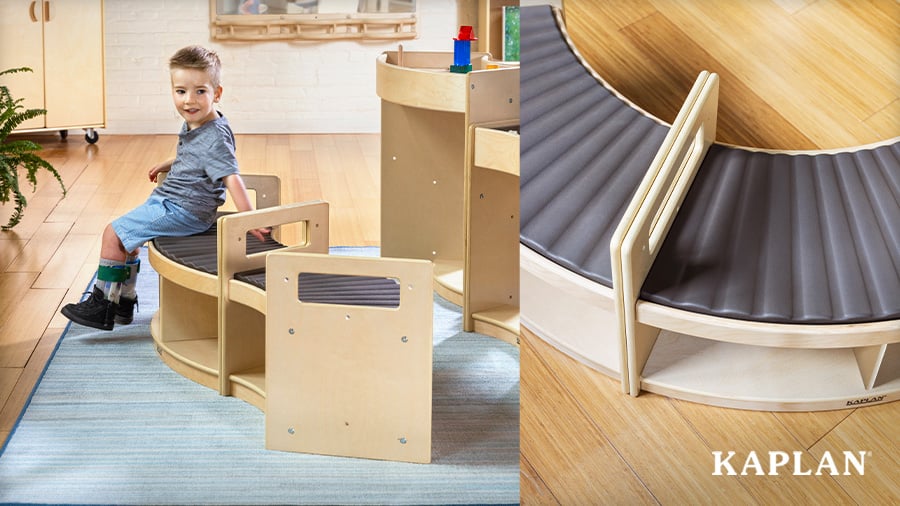
Sarah Taylor Vanover, EdD, author of Nurturing Neurodiversity: Creative Strategies for Engaging Young Learners, points out that flexible seating, such as wobble seats, yoga balls, and floor pillows, helps children with sensory needs participate in the learning environment while still providing the movement their bodies need.
The next step matters just as much as the seating itself: how you bring it into the classroom. We recommend starting small and adjusting as you go.
- Identify 1-2 children who show signs of needing more movement to focus. Look for the child who has trouble sitting still and constantly fidgets, rocks, or sways.
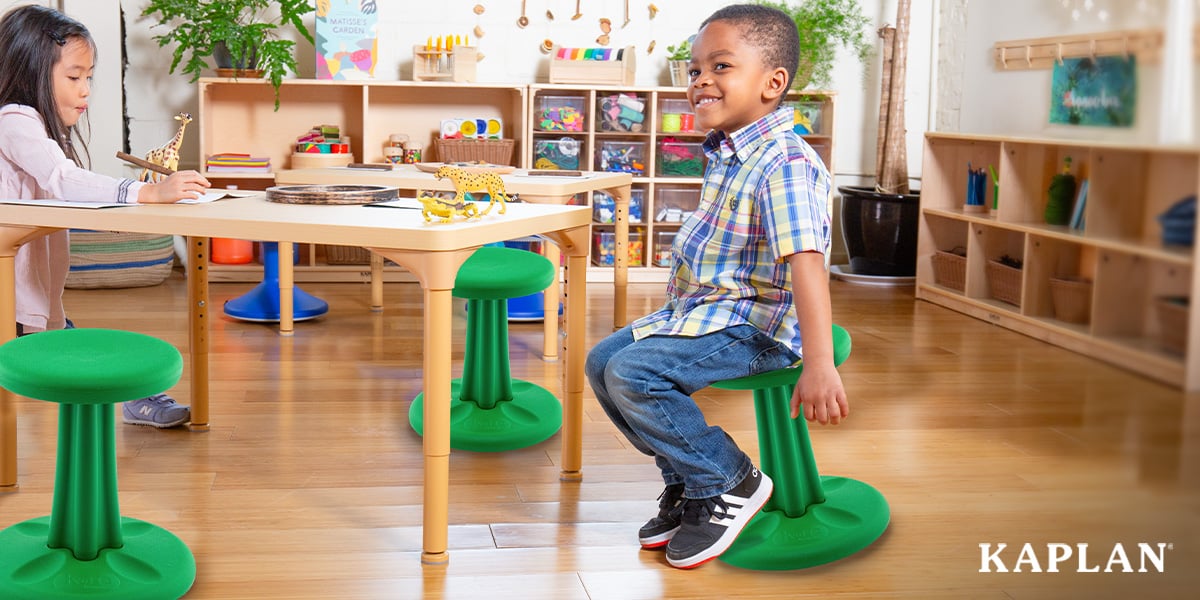
- Offer those children a flexible seating option. Introduce a Hokki Stool or a balance ball to give them the additional sensory input they need to stay engaged.
- Observe their response for at least one week. Watch for signs that the seating is helping—or hindering—their focus and regulation before rolling it out to other children.
- Keep traditional chairs available as the default. Flexible seating should be used as an optional support tool for children who need it most.
Starting with a small group makes it easier to see what works and make changes before expanding it to the whole classroom.
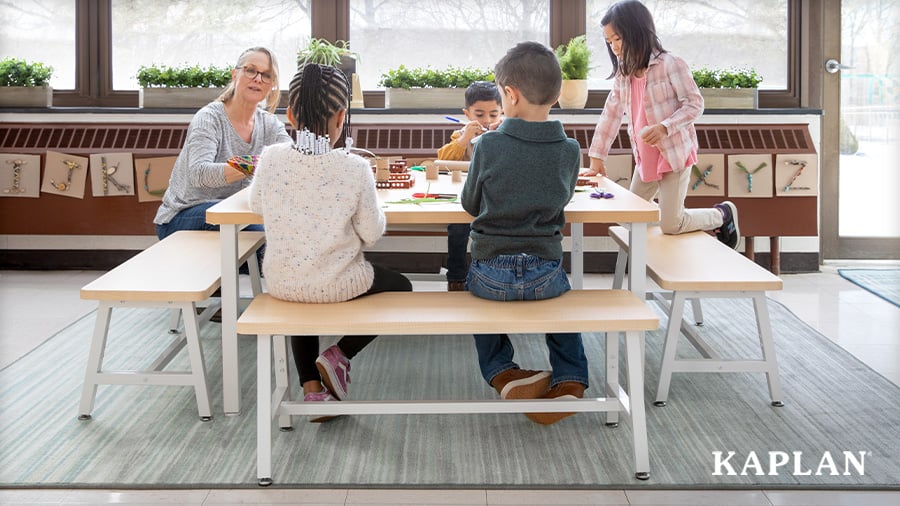
2. Model how to use each seating option before children use it on their own
Children won’t automatically know how to use flexible seating properly. When given a wobble stool, for example, a child may see it as a bouncy toy rather than a tool that supports gentle, controlled movement. Like any other classroom material or routine, that expectation has to be taught and shown.
As Keriann Wilmot, OTR/L, writes in Wired Differently: A Teacher’s Guide to Understanding Sensory Processing Challenges, children have different learning styles and can all benefit from a variety of flexible seating options. But she adds an important reminder: set firm limits and boundaries for how the seating can be used.
Here are a few ways to model expectations with children:
- Use simple, visual language paired with a demonstration. Sit on the stool yourself and say, "Feet flat, slow rock.” Then show children exactly what that looks like in action.
- Let them practice one at a time. Give each child a turn to try the seating for at least 2-3 minutes. Offer positive reinforcement when expectations are met, such as "I like how you're keeping your feet on the floor."
- Pair modeling with an activity. Show children how to use flexible seating for specific tasks or routines, such as listening to a story during circle time or painting at an easel in the art center. This helps children connect the seating to real classroom moments.
- Revisit the modeling often. One demonstration isn't enough. Reinforce expectations with regular 'refreshers,' and let children take the lead sometimes. Ask, “Who can show us how to use the wobble stool?” Repetition builds habits.
Don't assume that children will know how to use flexible seating on their own. Taking time to model expected use from the beginning can prevent many of the problems that cause educators to give up on flexible seating before it has a chance to work.
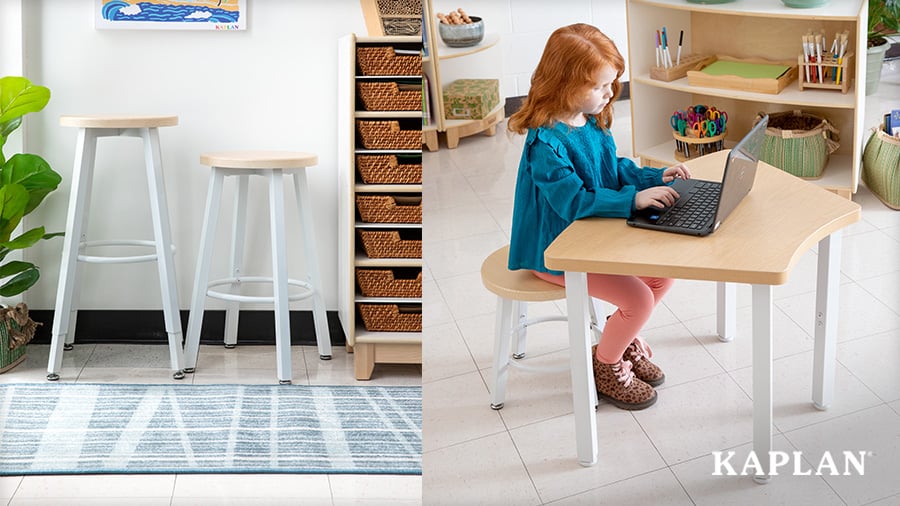
3. Set clear rules and boundaries from day one
Flexible seating requires the same kind of structure as any other classroom routine. And children thrive when expectations are clear and steady. In Calm and in Control: Simple and Effective Strategies to Support Young Children's Regulation, author Julie Tourigny, OTD, MS, OTR/L, notes that when children know what to expect, they tend to be calmer and more in control of their emotions.
Set the boundaries early: feet stay on the floor, movement stays gentle and slow, and seats stay put. Children don’t need a list of rules—just a few clear ones that are consistently reinforced.
Below are some practical ways to set and reinforce boundaries:
- Decide on 2-3 non-negotiable expectations before rolling out a new option. For example: "stool stays in one spot" or "if we can't focus, we switch back." Keep the rules short, clear, and easy to remember.
- Post visual reminders. A simple picture of children using seating appropriately gives them a reference point without needing a verbal reminder every time.
- Use a try-it-and-see approach. Let children know that flexible seating is an option only if they can use it safely. If a child struggles, switching back to a regular chair is simply part of the process, not a punishment. Frame it as: "This one didn't work for you today. Let's try again tomorrow."
- Revisit and reinforce rules regularly. Expectations fade without follow-through. Build in brief check-ins, like "Let's remember our wobble stool rules before we start." Consistency is what makes boundaries stick.
When rules are in place from the start, children understand that flexible seating is a privilege that comes with responsibility. That framing helps prevent the chaos that leads many educators to give up on it entirely.
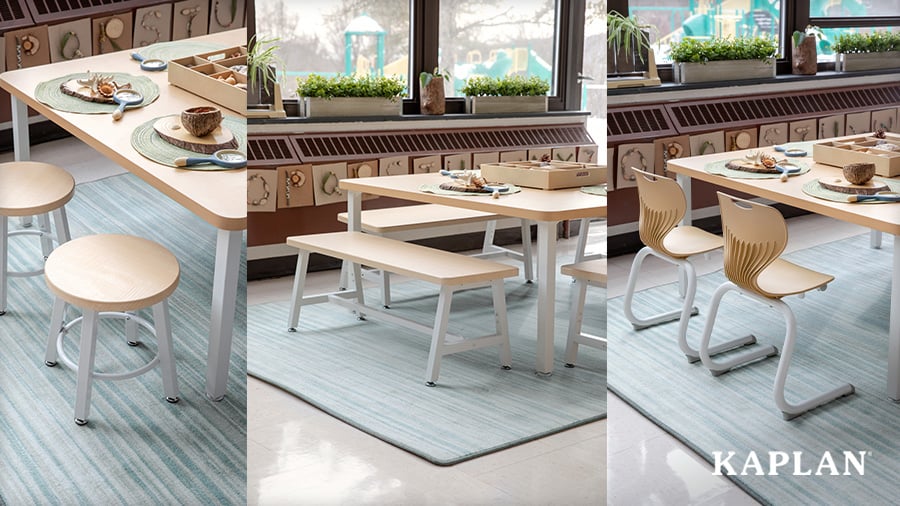
4. Accept that not every option will work for every child
Even with the right setup, some flexible seating options won't click for some children. That's a normal part of finding what works and not a sign to scrap the concept altogether. For example, if a balance ball consistently distracts a particular child, that doesn't mean flexible seating has failed. It often means that the child needs a different option.
As Wilmot explains in Wired Differently, no two children experience sensory input the same way. One child may thrive with the vestibular (movement) input of a wobble stool, while another may find better regulation through the deep-pressure support of a seat cushion or the resistance of bouncy bands on a traditional chair. The key is to stay flexible and willing to experiment until you find the right support for each child’s needs.
Try these strategies for finding the right fit:
- Try alternative seating options. There’s a variety of flexible seating options available. If a particular option doesn’t work, swap it out for another.
- Watch for patterns. Does a child focus better standing, kneeling, or sitting on the floor? These preferences offer clues about the type of seating that will serve them best.
- Talk with families and specialists. Occupational therapists and other support providers can recommend seating options that align with a child's sensory needs, while families can share strategies and seating preferences that already work well at home.
Success goes beyond finding one perfect seating option. It is ultimately achieved by your willingness to keep experimenting and adjusting until each child has an option that supports their focus and engagement.
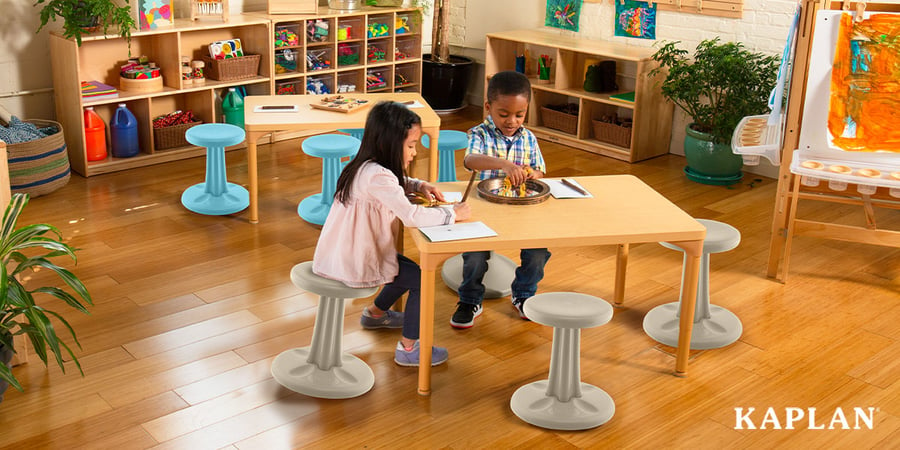
5. Allow freedom of choice
Preschoolers are developing a growing sense of autonomy, and letting them choose where and how they sit is one simple way to nurture it.
According to a literature review examining flexible seating in early childhood, giving children the power to choose their seating fosters a sense of ownership over their own participation and engagement in learning. This small choice goes a long way for young learners who are just beginning to build independence and self-regulation.
Here are simple ways to apply this to flexible seating options:
- Get children's input. Ask questions like, "Does this help you focus?" or "Do you think you'd concentrate better somewhere else?" Their responses can help you understand what supports them best while nurturing their budding independence.
- Offer a flexible seating menu. Rather than assigning a single seating option, provide a small rotation of 2-3 choices for children to try during different activities. This helps them discover which seating options work best in different situations.
- Normalize flexibility. Remind children that it's okay to switch seating if something isn't working. Framing flexible seating as a tool—not a reward—helps children learn to recognize their own needs and support their regulation.
Over time, children learn which seating options help them focus and gain the confidence to choose what they need in the moment.
Create more dynamic learning spaces with flexible seating
Flexible seating can be a powerful tool for helping children focus, regulate, and engage. But it can't be left to chance. Rather, it has to be introduced with the same care and structure as any other classroom routine. When you match seating options to individual needs, model expectations, set clear rules, and stay flexible about what works, a simple experiment becomes a lasting, effective classroom practice.
If flexible seating didn’t work in the past, try again with a more structured approach. Start with one child, one seating option, and a clear set of expectations, then build from there. The children who need it most—those who fidget, rock, or struggle to sit still—are often the ones who benefit most when it’s done right.
Looking for flexible seating made for preschool and early elementary learners? Browse Kaplan’s collection of wobble stools, balance balls, seat cushions, and more—all designed to support intentional movement and focused learning.