Choosing classroom furniture is about more than filling a space. A simple table or desk can shape how students learn, focus, and work together. Plus, how you seat students can mean the difference between a focused, engaged classroom and one filled with distractions and interruptions.
So which works best: collaborative tables or individual desks? Which option best supports collaboration and independent work? Are desks or tables better for classroom management? Which setup makes the best use of classroom space?
The truth is, either can work well, but for various reasons. In this article, we'll look at the pros and cons of using collaborative tables and individual desks in early elementary classrooms. We'll also cover other factors to consider when selecting classroom furniture. By the end, you'll be equipped with practical tips for designing an early elementary classroom that enhances learning, maximizes space, and keeps behavior under control.
What is the purpose and benefit of individual desks?
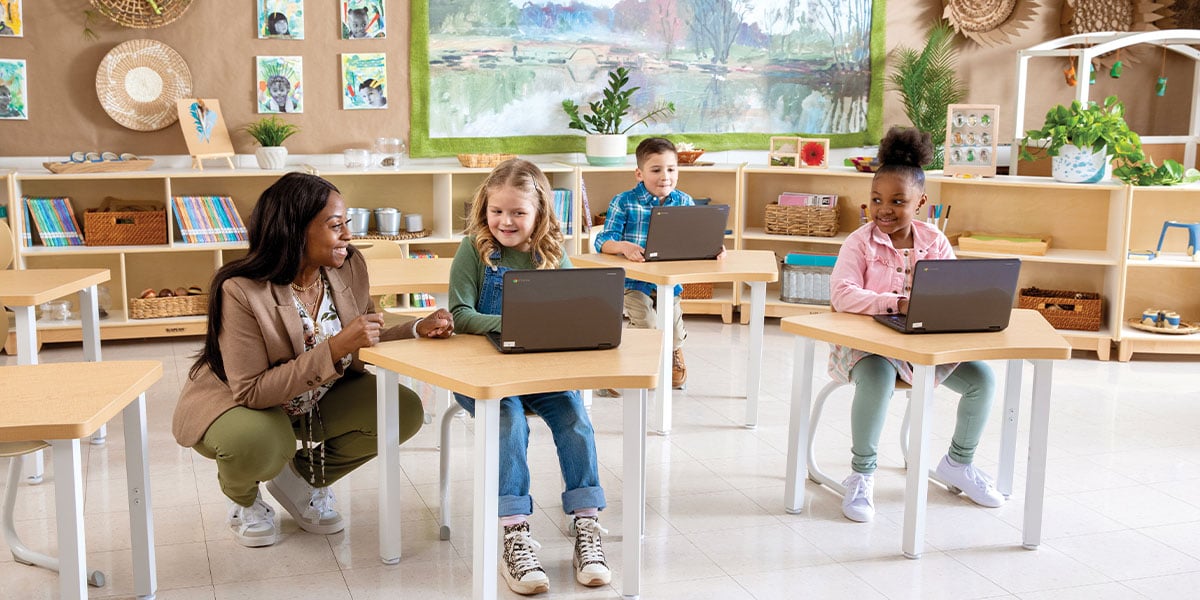
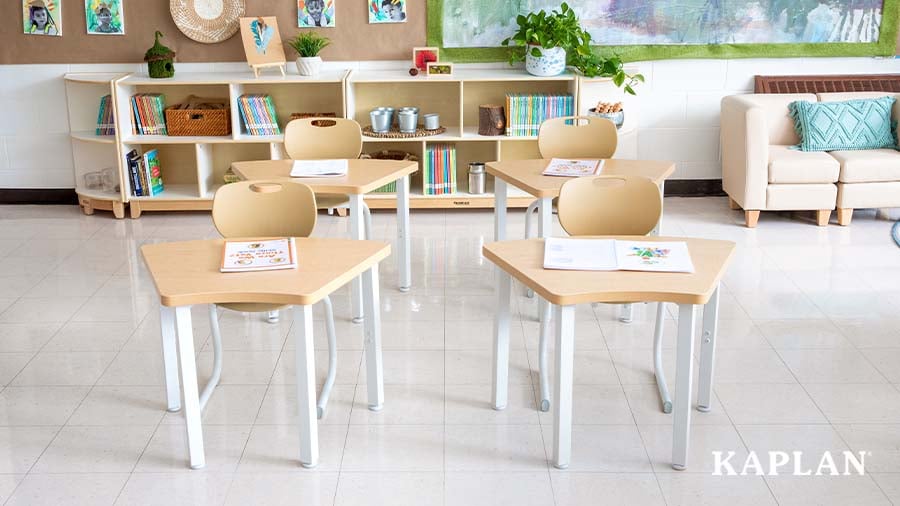
Individual desks give each student their own workspace with clear boundaries. The setup works best for those who need their own space to focus and work independently. There’s also a dedicated area to store supplies and materials, which fosters a sense of ownership, responsibility, and security for students.
For teachers, seating students at individual desks helps curb behavioral issues, keeps them on task, and limits classroom disruptions. Individual desks are also flexible and can be rearranged into rows, clusters, or U-shaped formations to accommodate different lessons, activities, or room dimensions.
Key benefits of individual desks:
- Better focus. Students can focus on their work without distractions from their peers. One study found that students in individual desks scored higher on specific thinking tasks, such as logical reasoning.
- Personal storage. Each student has their own space to keep supplies, books, and items organized and within reach.
- Clear boundaries. Some students need their own space to feel secure and calm, especially those who are shy or struggling with sensory processing issues.
- Easier behavior management. Teachers can quickly see who needs support. They can also address individual issues without disrupting the whole group.
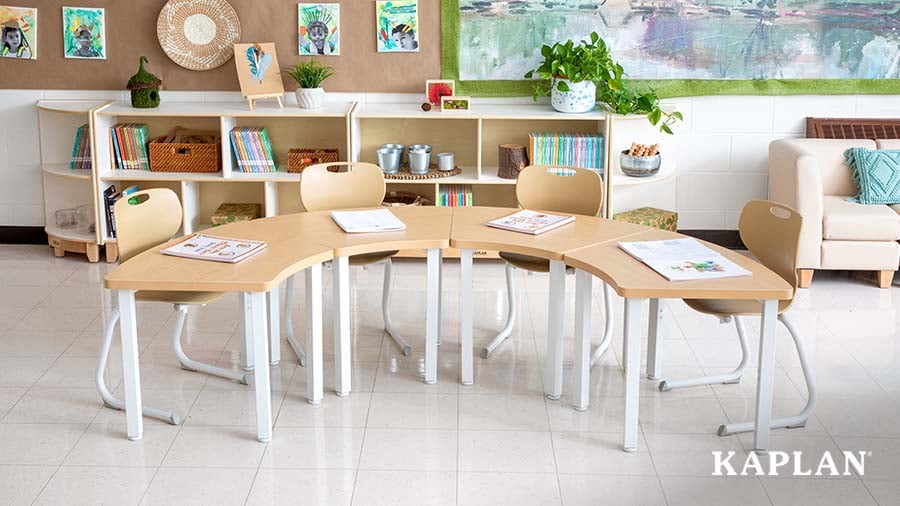
What is the purpose and benefit of collaborative tables?
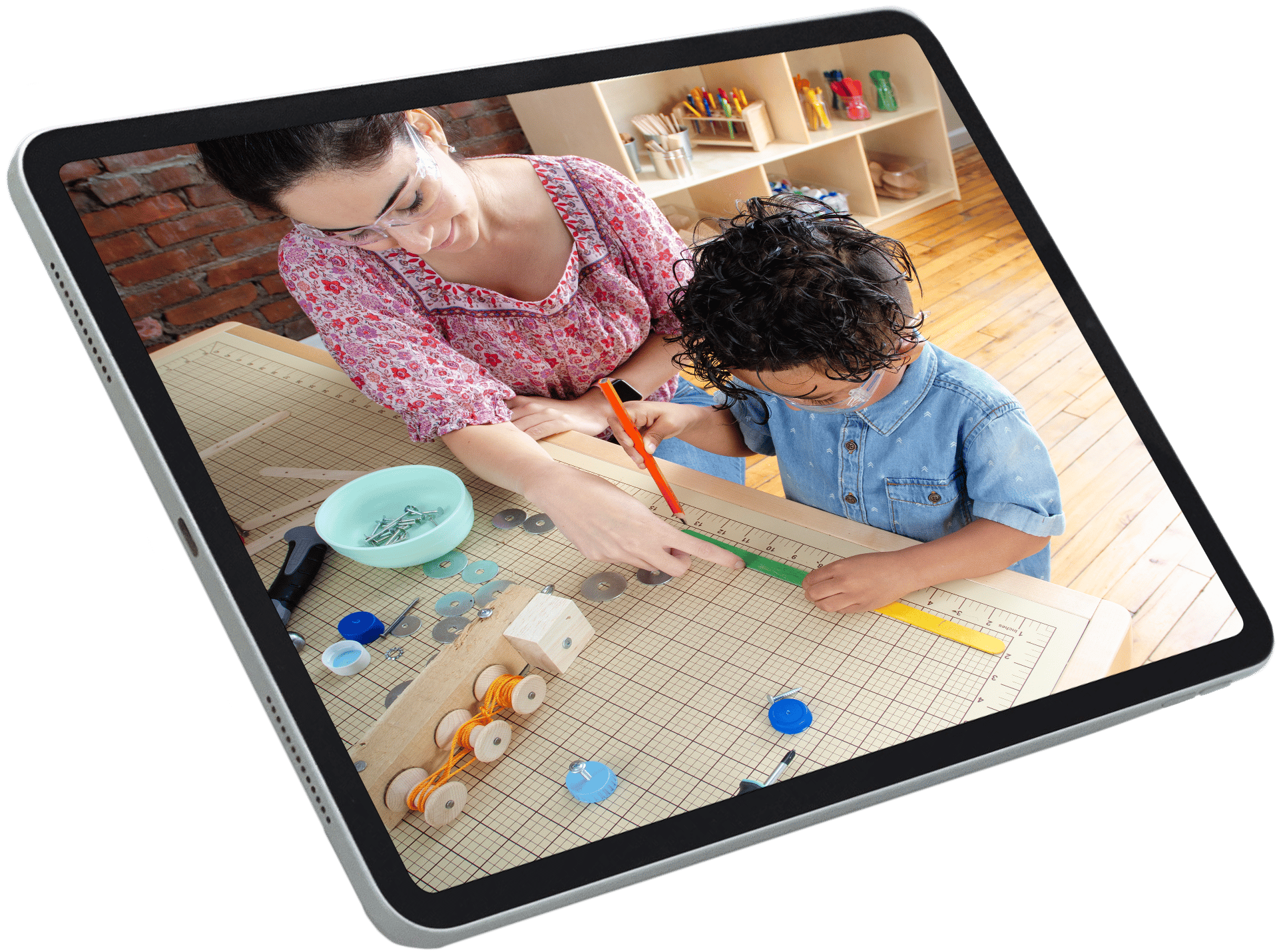
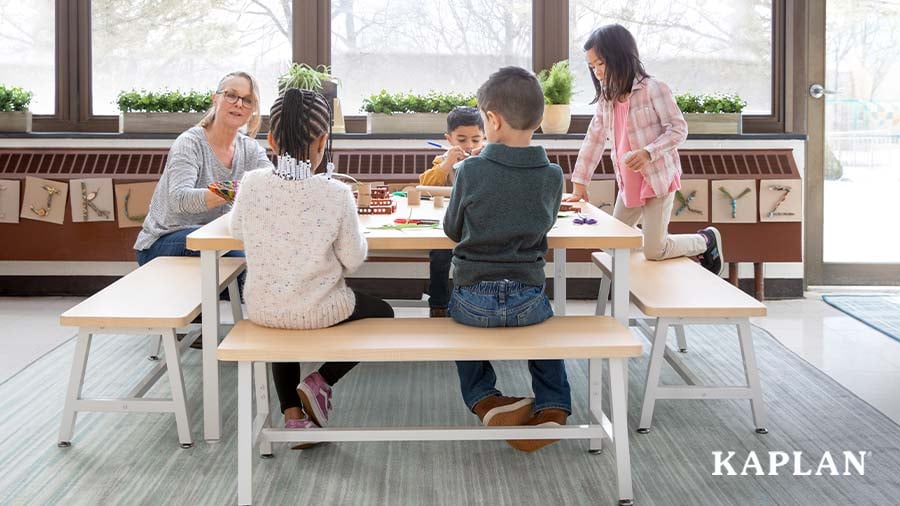
Collaborative tables bring students together. They encourage social interaction, teamwork, and communication. Students sitting together naturally talk, share ideas, and help each other with tasks—creating a sense of community in the classroom.
This setup also supports teaching styles that emphasize peer learning, like project-based and cooperative learning. These methods rely on collaboration, peer interactions, and idea sharing to drive learning. As an extension, students develop essential social skills, including sharing, taking turns, and working together to solve problems.
Key benefits of collaborative tables:
- Better collaboration. Students naturally engage and learn from each other when they’re seated together.
- Space efficiency. Tables often fit more students in less space than individual desks, making them ideal for smaller classrooms.
- Natural peer support. Students can help each other with tasks without prompting. They can ask questions and learn from each other’s perspectives.
- Community building. Sitting together creates belonging. It helps students form friendships and positive relationships with others in the class.
What else should you consider when choosing between collaborative tables and individual desks?
The best classroom layout keeps every student learning and engaged, while also providing you with space to teach, supervise, and connect. Below are a few factors to consider when selecting the best arrangement for your learning space:
1. Your instructional approach
Early elementary classrooms often use an instructional framework set by the school district to guide teaching strategies. Some examples include:
- Project-based learning: Involves students working on long-term group projects that span multiple skills and subjects.
- Differentiated instruction: Tailors instruction to meet the needs of each student, and involves whole-group, small-group, and one-on-one time.
- Cooperative learning: Groups students in pairs or small groups to complete a specific task or challenge.
Within the district’s instructional framework, teachers can choose methods that best fit their students and lessons. For example, you might use scaffolding in small groups to support a struggling reader with decoding, or hands-on learning by growing a pumpkin to introduce plant biology.
When designing your classroom, aim for a flexible layout that supports your instructional strategy and adapts to different teaching methods—even as they shift throughout the day. With individual desks, you can quickly reconfigure the room for group or one-to-one instruction. But collaborative tables may restrict opportunities for independent learning. Whether you choose desks or tables, the goal is a classroom that adapts to your teaching style, and not the other way around.
2. Classroom layout and design
Your physical space plays a significant role in determining which setup will work best. In small classrooms, individual desks may feel cramped, while collaborative tables maximize space by seating multiple students together. Still, desks offer flexibility to design seating that works with the room’s layout.
Aim to create clear pathways so students can move around the classroom and participate comfortably in all activities. Ask yourself:
- Can you easily reach every student to provide support?
- Is there space for small-group activities without disrupting others?
- Are students bumping into each other as they transition between activities?
- Can students get materials without knocking into furniture or other students?
Considering these questions helps you choose furniture that best fits your space, while supporting every student in your classroom. If you need support, Kaplan offers full-service classroom design, delivering custom visual renderings tailored to your space that position furniture for maximum educational impact.
3. Different learning and social needs
Learning and developmental needs vary widely in early elementary classrooms. Some students have physical, sensory, or learning challenges that affect their participation in specific lessons and activities. They may require special accommodations, like adaptive furniture, accessible layouts, or modified design considerations, to learn and engage alongside their peers. At times, these students may need to be seated alone to stay focused, regulate their behavior, or receive individualized support.
Some students are naturally outgoing and thrive in group settings. These students typically feel more secure when surrounded by peers. Others may be more shy and reserved, or struggle with social skills like sharing and taking turns. These students, on the other hand, may need individual space to stay calm and engaged.
Think about the diverse range of personalities in your classroom. Your setup should be flexible and accommodate every student’s learning style and abilities.
Collaborative tables vs. individual desks: pros and cons
This chart shows the key advantages and challenges of each setup. Use it to help make the best choice for your classroom.
|
Individual Desks |
Collaborative Tables |
|
Pros: |
Pros: |
|
Better focus |
Better collaboration |
|
Personal storage space |
Space-efficient design |
|
Clear boundaries |
Natural peer support |
|
Cons: |
Cons: |
|
Less collaboration |
More distractions |
|
Requires more space |
Limited personal space |
|
Can feel isolating |
May increase conflicts |
|
Harder to rearrange |
Needs strong group management |
How can you support both group and individual learning?
Many classrooms benefit from both types. A hybrid approach works particularly well for early elementary classrooms, where teachers use multiple strategies to support a wide range of learners. It mirrors the diverse ways students learn, and flexible furniture makes it easy to adapt your layout as their learning needs evolve throughout the day or year.
Kaplan's Sense of Place for Early Elementary collection offers the perfect solution. With personal desks, teachers can seat students independently or rearrange the desks for group activities. They provide the best of both worlds:
- Individual use: Each student has their own workspace with personal storage and clear boundaries. This works well for independent work, reading, or tasks that require focus.
- Group arrangements: You can easily create desk clusters for group projects, collaborative play, or peer learning activities.
This flexibility means you don't have to choose between supporting individual learners and fostering collaboration. You can adapt your classroom layout based on the activity, the time of day, or the specific needs of your students.
Explore Kaplan's Sense of Place for Elementary collection
Both collaborative tables and individual desks have clear benefits. The choice depends on your district’s specific needs and teaching approach. The most effective classrooms often combine elements of both, and they use flexible furniture that accommodates various learning scenarios.
Whether you choose collaborative tables, individual desks, or a hybrid approach, the key is selecting furniture that fits your space, adapts to your teaching style, and supports diverse student needs. The furniture you choose sets the stage for a learning environment where every student can thrive.
Ready to explore flexible furniture options? Kaplan's Sense of Place Elementary Collection includes:
- Personal desks that work individually or in groups
- Curved collaboration tables designed for teamwork
- Square collaboration tables perfect for small groups
These thoughtfully designed pieces support both independent work and group learning throughout the school year. With the right layout, your classroom can adapt, inspire, and evolve alongside every student.